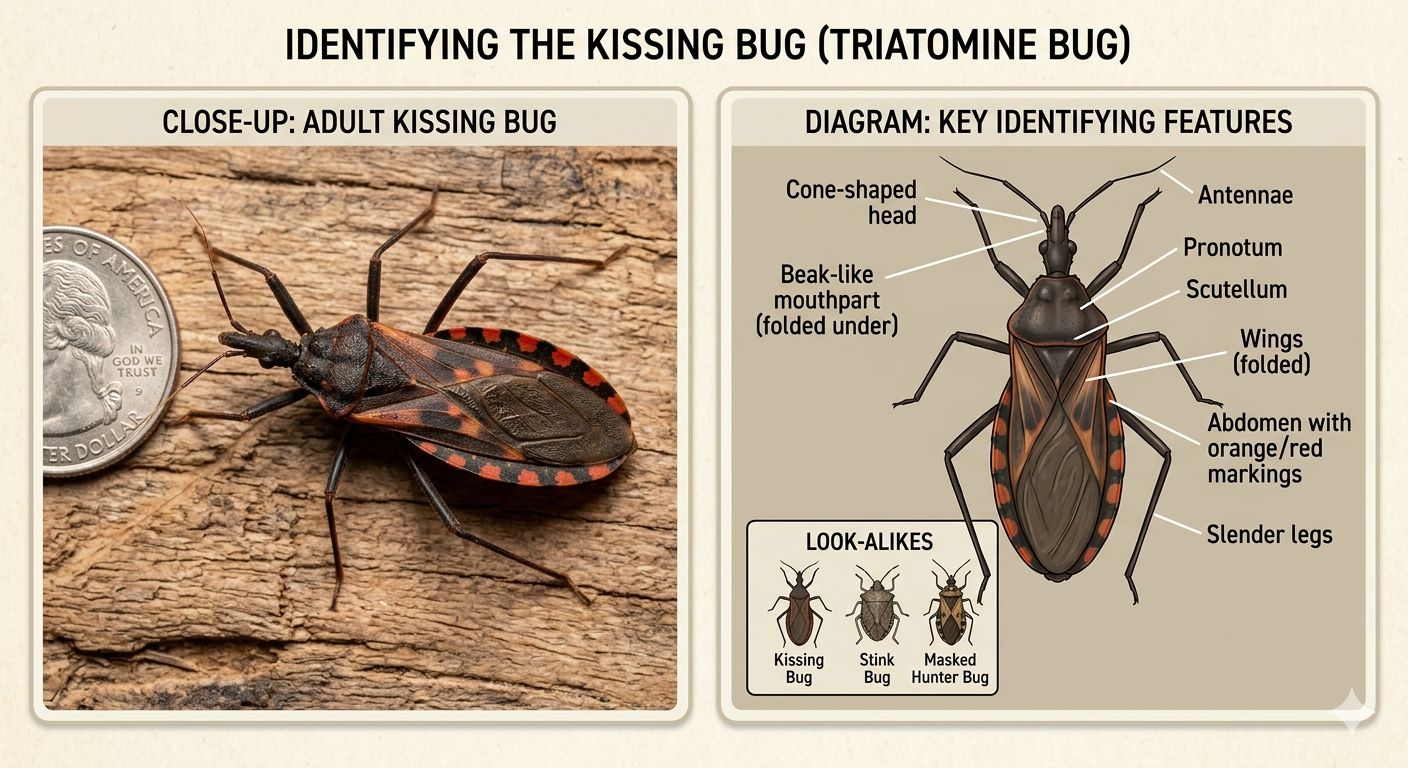
At our center, the health and safety of your children are our highest priorities. We want to provide you with clear, helpful information about Triatomine bugs—often called "kissing bugs"—so you can stay informed without feeling overwhelmed.
What is a Kissing Bug?
These are small, winged insects typically active at night. They earned their nickname because they tend to bite near the mouth or eyes while people are sleeping. While they are more common in Central and South America, they are also found in many parts of the United States.
How to Identify Them
Knowing what to look for is the first step in prevention. Here are the key features of an adult kissing bug:
- Shape: They have a distinct, elongated, cone-shaped head.
- Size: They are usually about 0.5 to 1 inch long.
- Markings: Look for a band of orange or red stripes around the edge of their dark brown or black abdomen.
- Legs: Their legs are long and thin, and they do not have "bulky" back legs like some other similar-looking insects.
Why are they a concern?
The primary reason for caution is that some kissing bugs carry a parasite called Trypanosoma cruzi, which can cause Chagas disease. It is important to know that not every bug carries the parasite, and the risk of contracting the disease is generally low. The parasite is not transmitted through the bite itself, but rather through contact with the bug's waste. By keeping our environment clean and bug-free, we significantly reduce any potential risk.
Our Commitment to Safety
We remain extremely diligent about maintaining a safe environment for all the children in our care.
- Regular Preventative Treatment: Our premises and playgrounds are professionally sprayed and inspected on a regular schedule to deter pests.
- Vigilant Groundskeeping: We keep our outdoor play areas clear of woodpiles, heavy leaf litter, and debris where these bugs prefer to hide.
- Staff Training: Our team is trained to monitor both indoor and outdoor spaces daily to ensure they remain secure.
Simple Safety Tips for Home
You can take these easy, practical steps to protect your own home:
- Check Screens: Ensure all window and door screens are tight-fitting and free of holes.
- Outdoor Lighting: Kissing bugs are attracted to light. Use yellow "bug bulbs" for outdoor fixtures or turn off porch lights at night when possible.
- Clear Debris: Keep firewood, rock piles, and garden waste away from the foundation of your house.
We are dedicated to providing a secure and happy space for your little ones to grow. If you have any questions regarding our safety protocols, please feel free to reach out to the office.